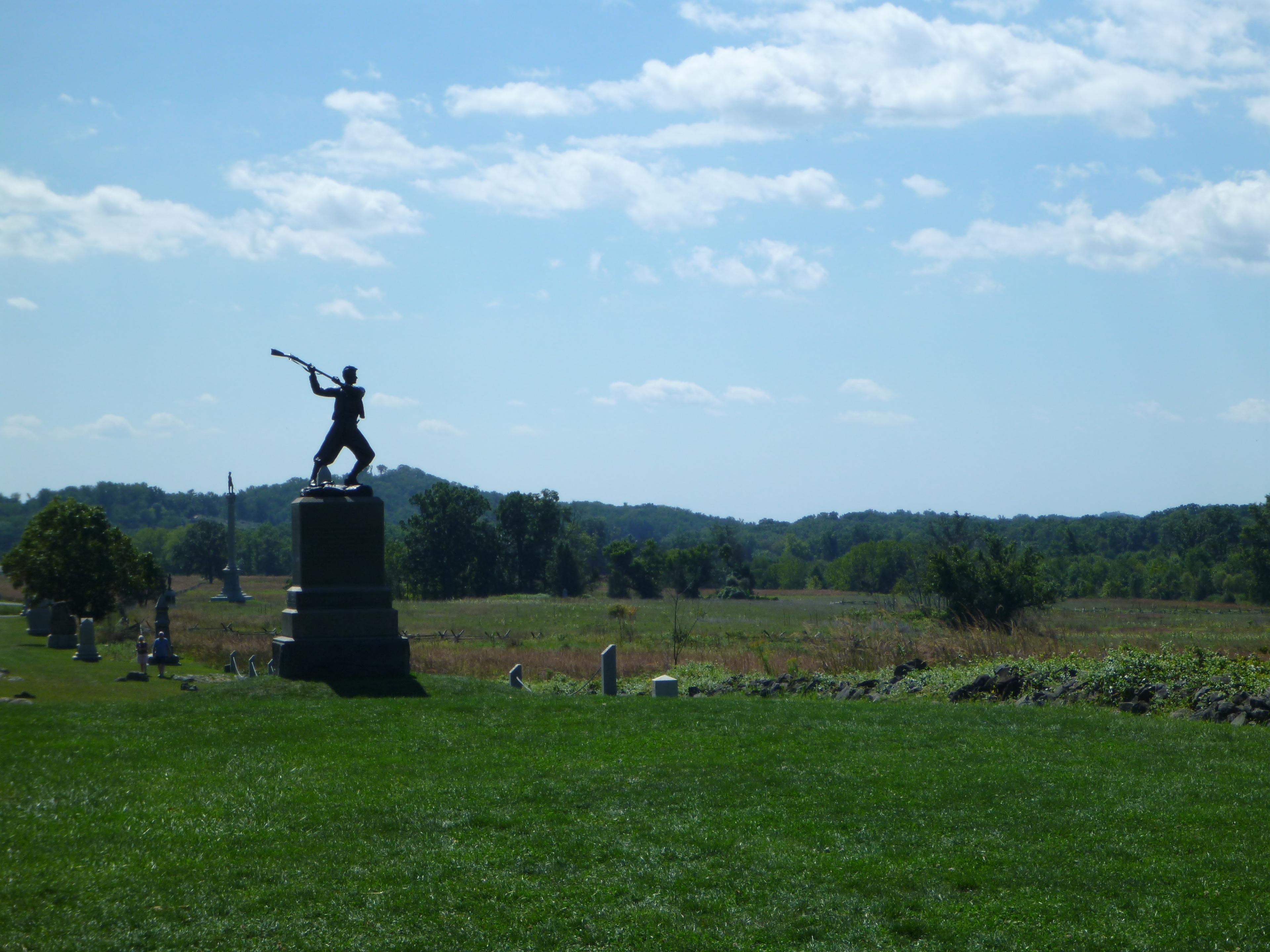
Additional materials related to National Parks and the Supreme Court and images from the book are shared here.
Thirty years after the Battle of Gettysburg, construction of an electric tourist railway threatened the integrity of the battlefield and a national park designation. The U.S. government exercised the power of eminent domain to preserve the site for historic preservation purposes. A challenge to this action would go to the Supreme Court.
SCROLL over images to see captions.
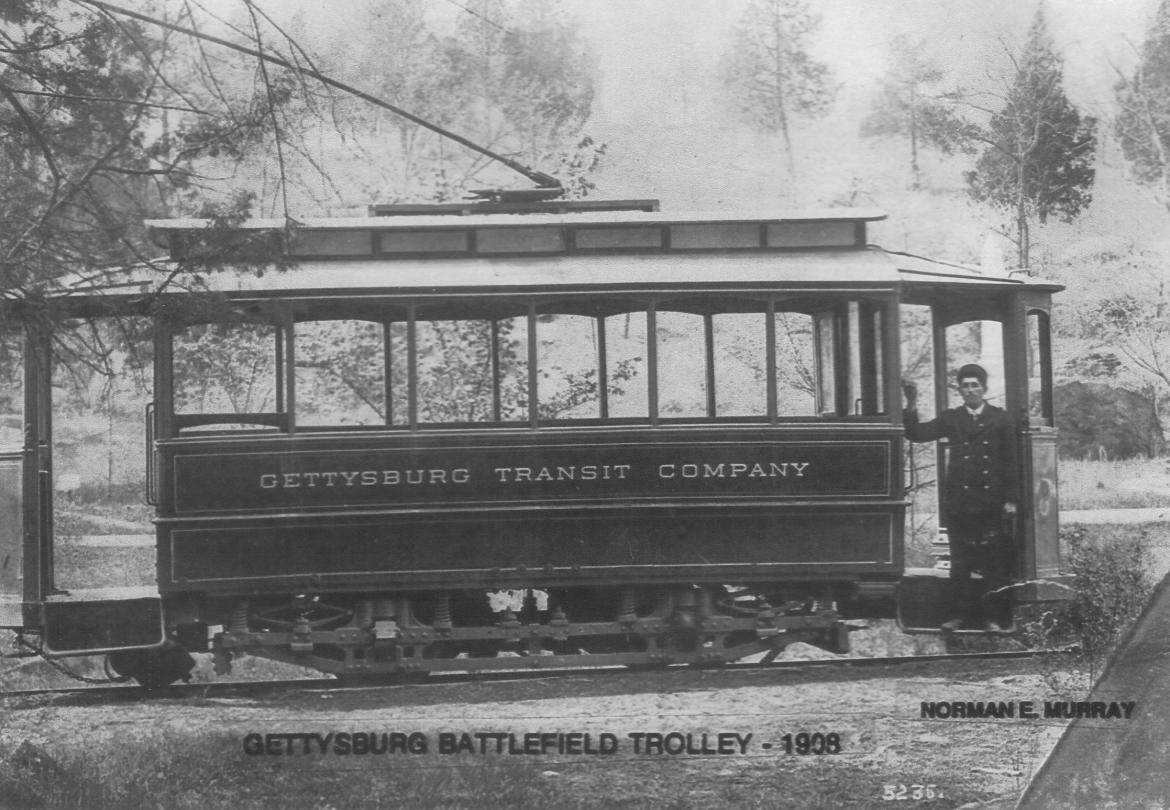
Six trolley cars picked up passengers every ten to fifteen minutes for a fare of ten cents. NPS GNMP Library Image
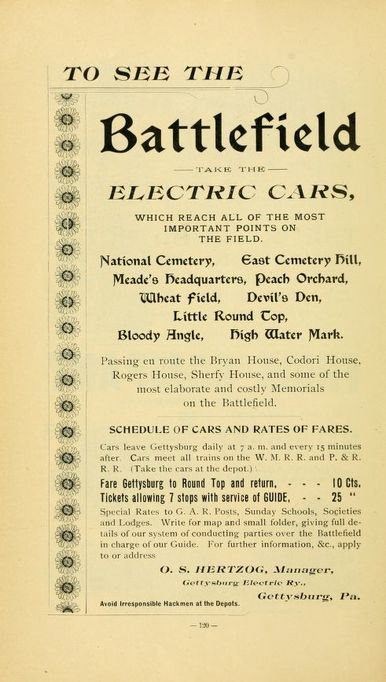
Advertisement showing the main stops. The Street Railway Review 1893
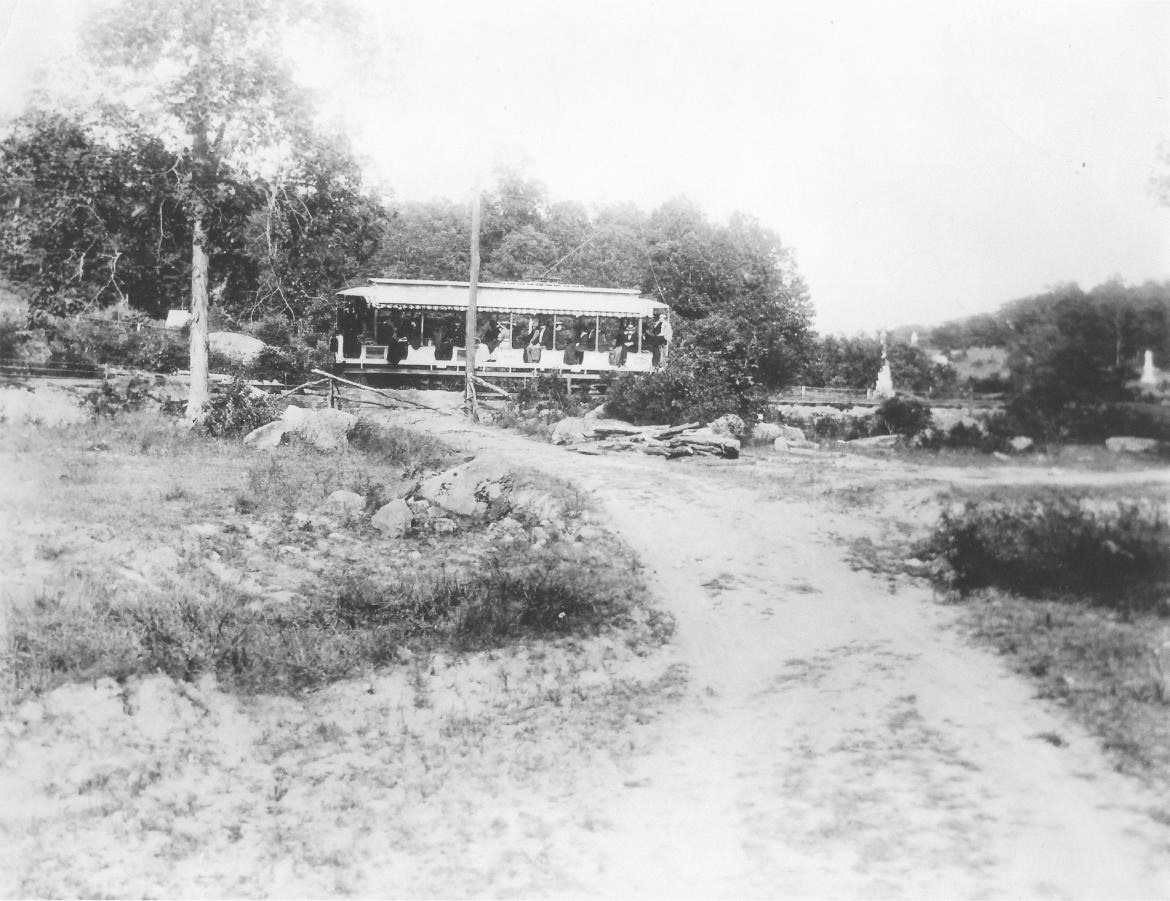
Trolley in Rose's Wheatfield, courtesy of NPS GNMP Library
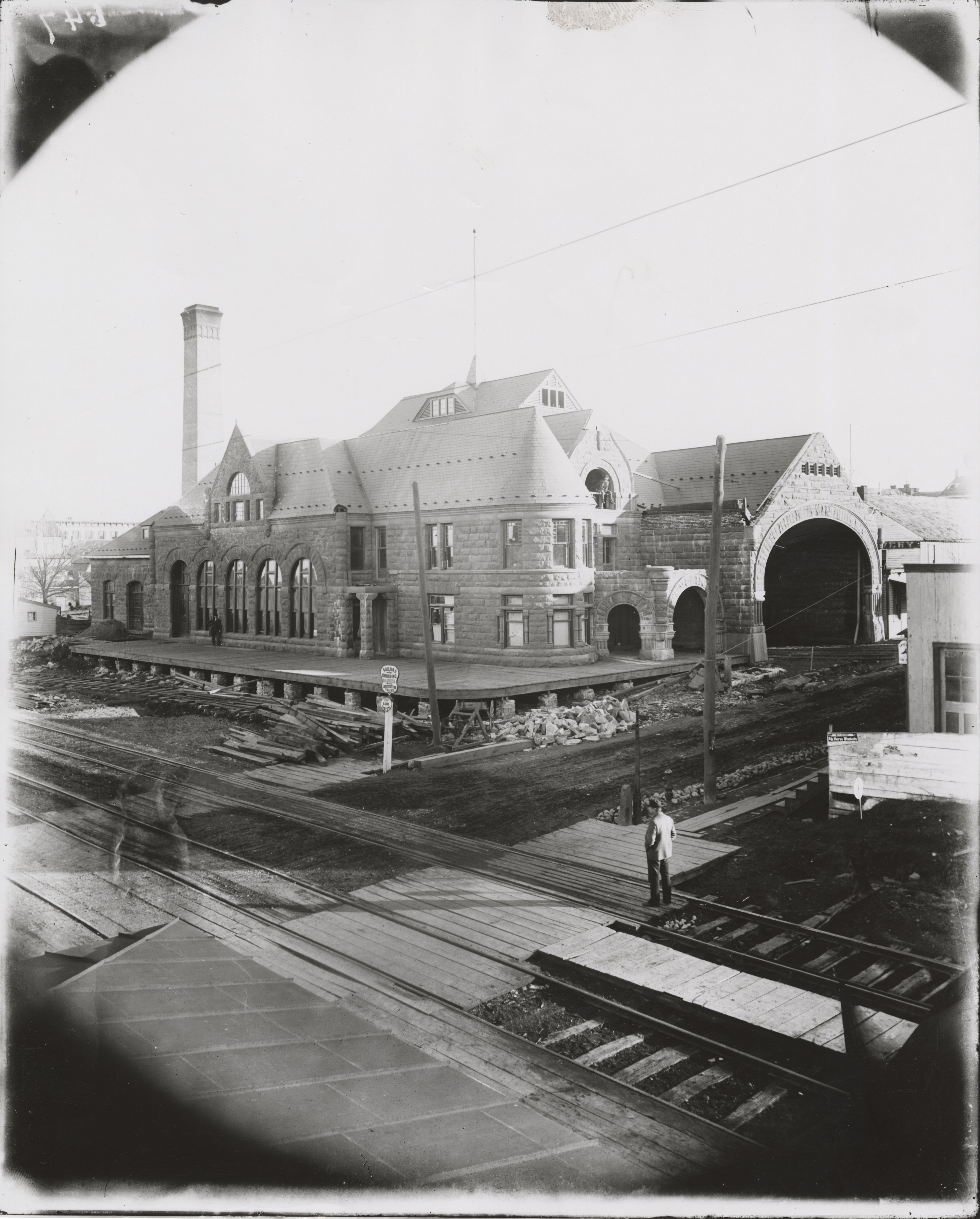
Electric Light, Heat and Power Company of Gettysburg, NPS GMNP Library
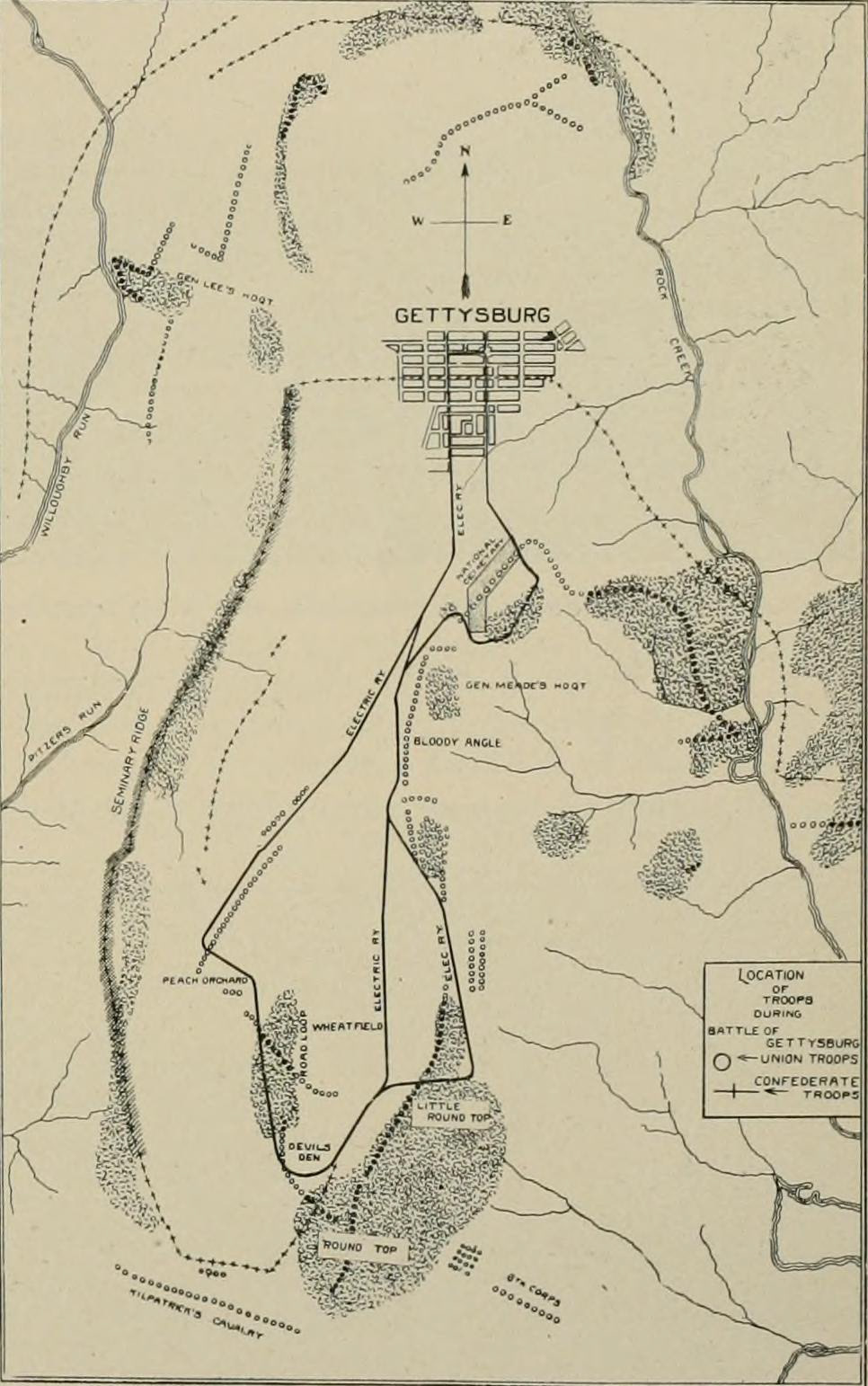
1891 Map of the 12-mile loop, The Street Railway Review, American Street Railway Association
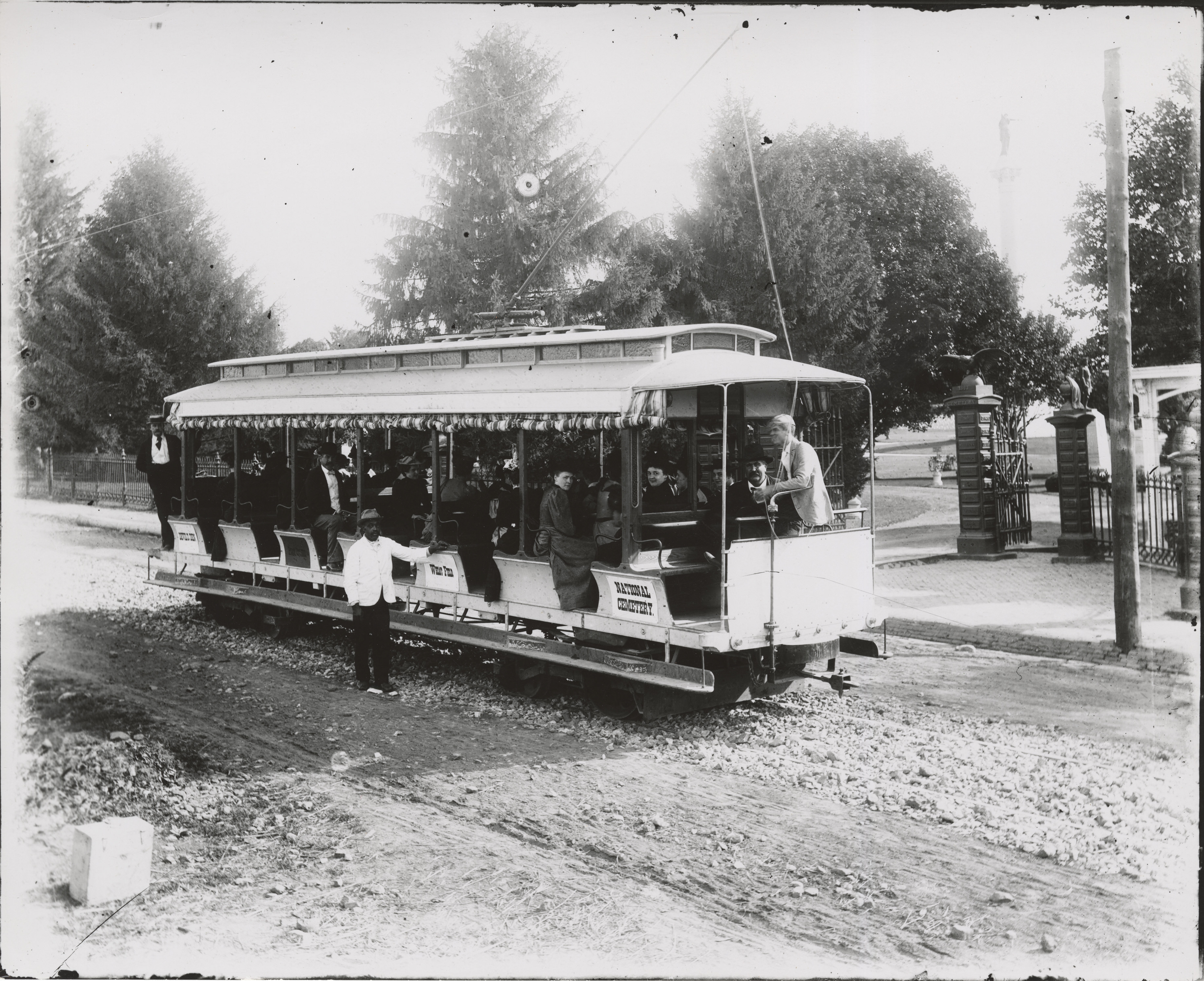
Electric trolley at the Soldiers' National Cemetery Baltimore St. entrance. NPS GNMP Library
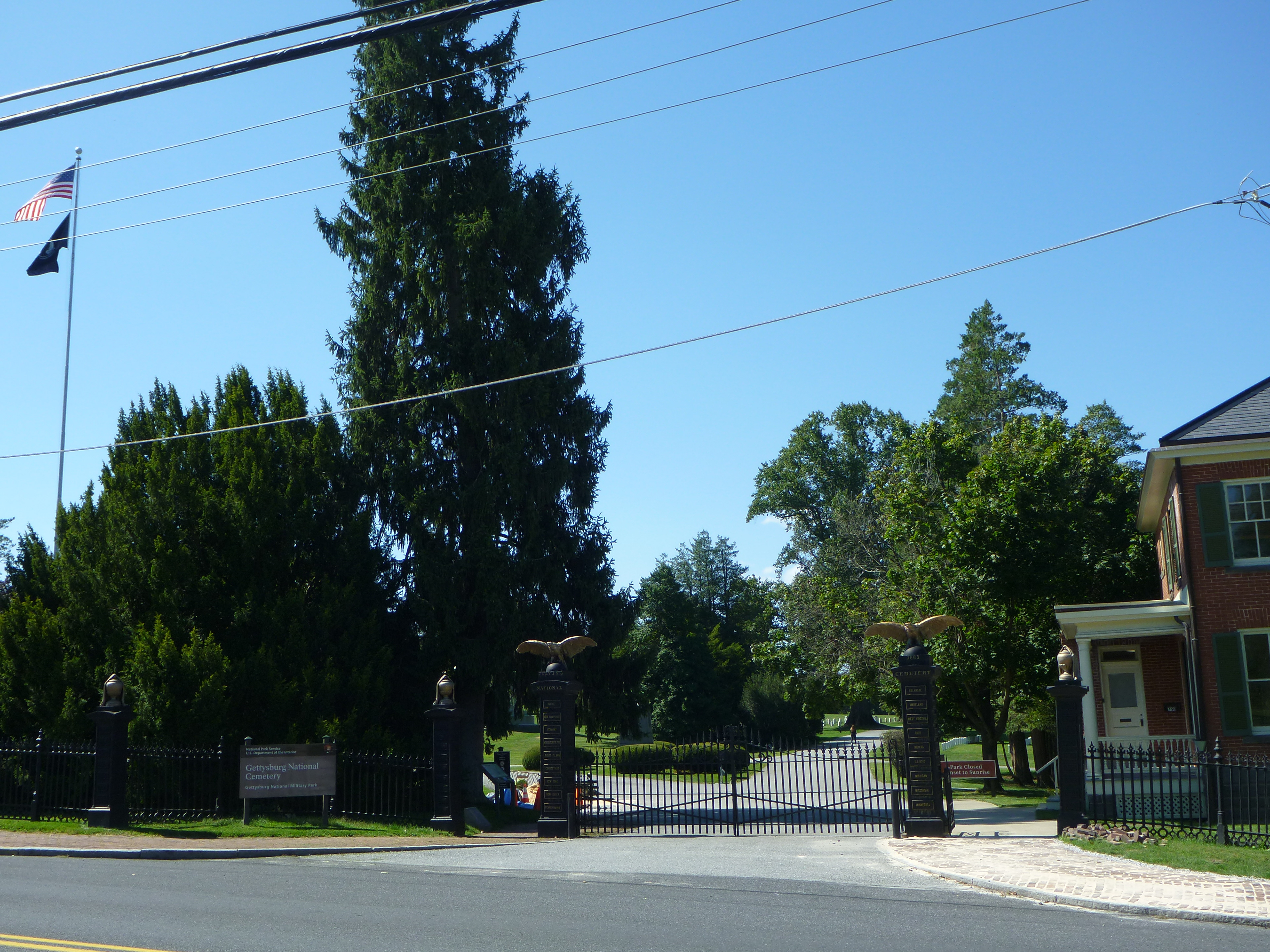
The same entrance in 2024. Author's photo
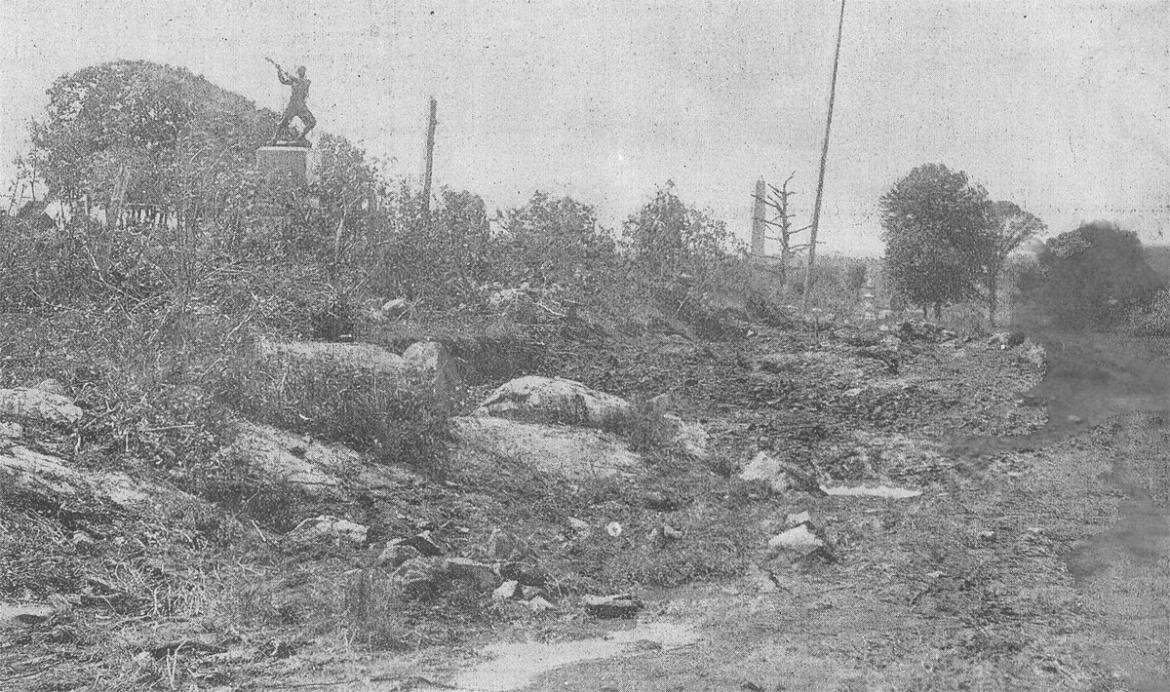
The Bloody Angle showing railway construction. Pictured in Harper's Weekly July 1, 1893.