Additional materials related to National Parks and the Supreme Court and images from the book are shared here.
SCROLL over images to see captions.
Between 1778 and 1871, the U.S. government ratified 370 treaties with Native American tribes to make way for non-Native settlers. Tribes gave up large swaths of their territory in exchange for exclusive reservations, promises of protection and welfare, and guarantees to hunt and fish on ceded lands. In 1895, a member of the Bannock Tribe killed seven elk in Wyoming outside of the tribe’s treaty reservation but on ceded land with hunting rights. He was arrested by a Wyoming sheriff for violating the state’s hunting laws. This was all part of a test legal case designed by the U.S. government and the Governor of Wyoming to settle the status of Native American off-reservation treaty rights in the Yellowstone region.
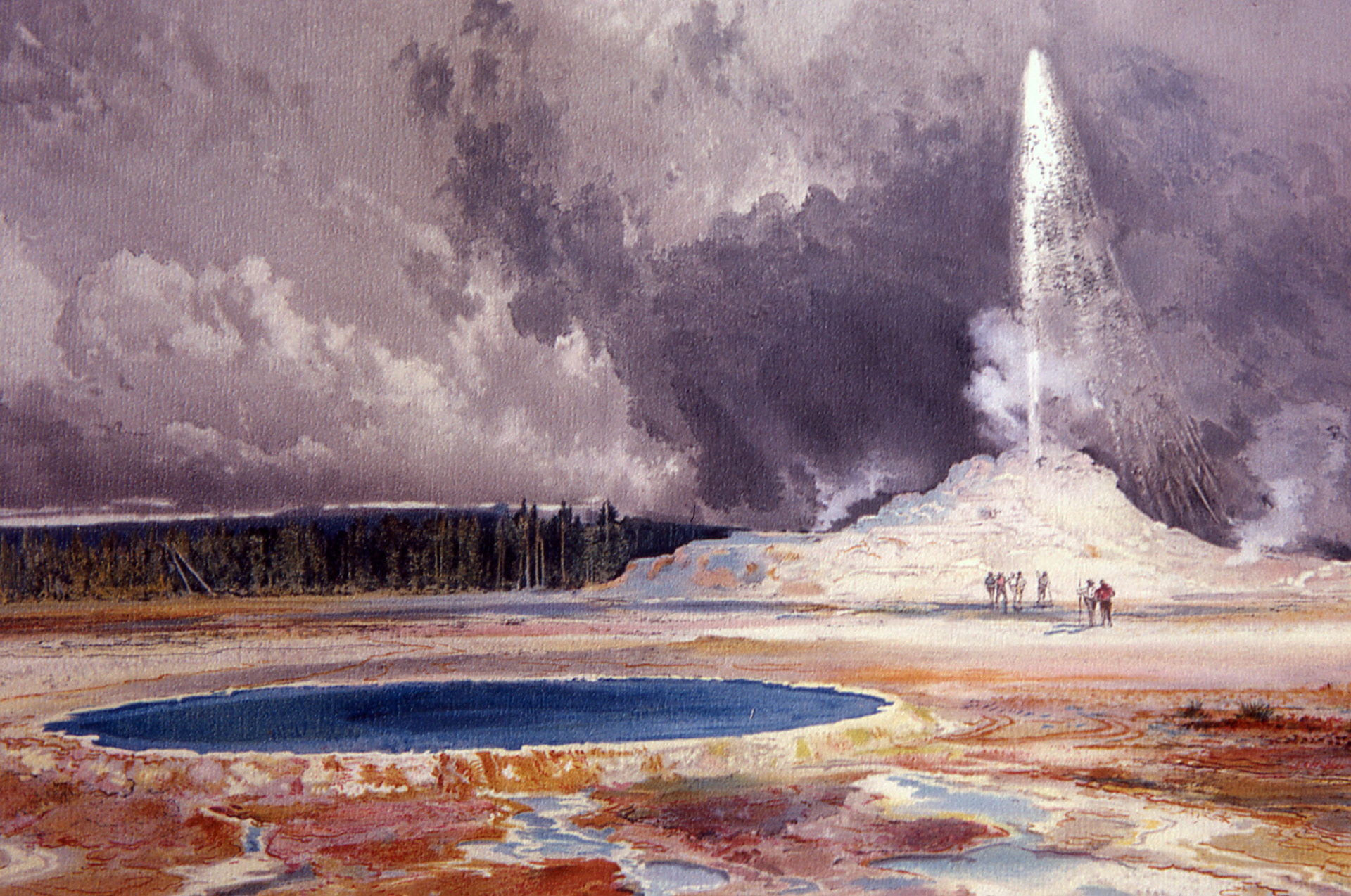
Castle Geyser, Yellowstone National Park, by Thomas Moran c. 1870s, NPS Photo Collection
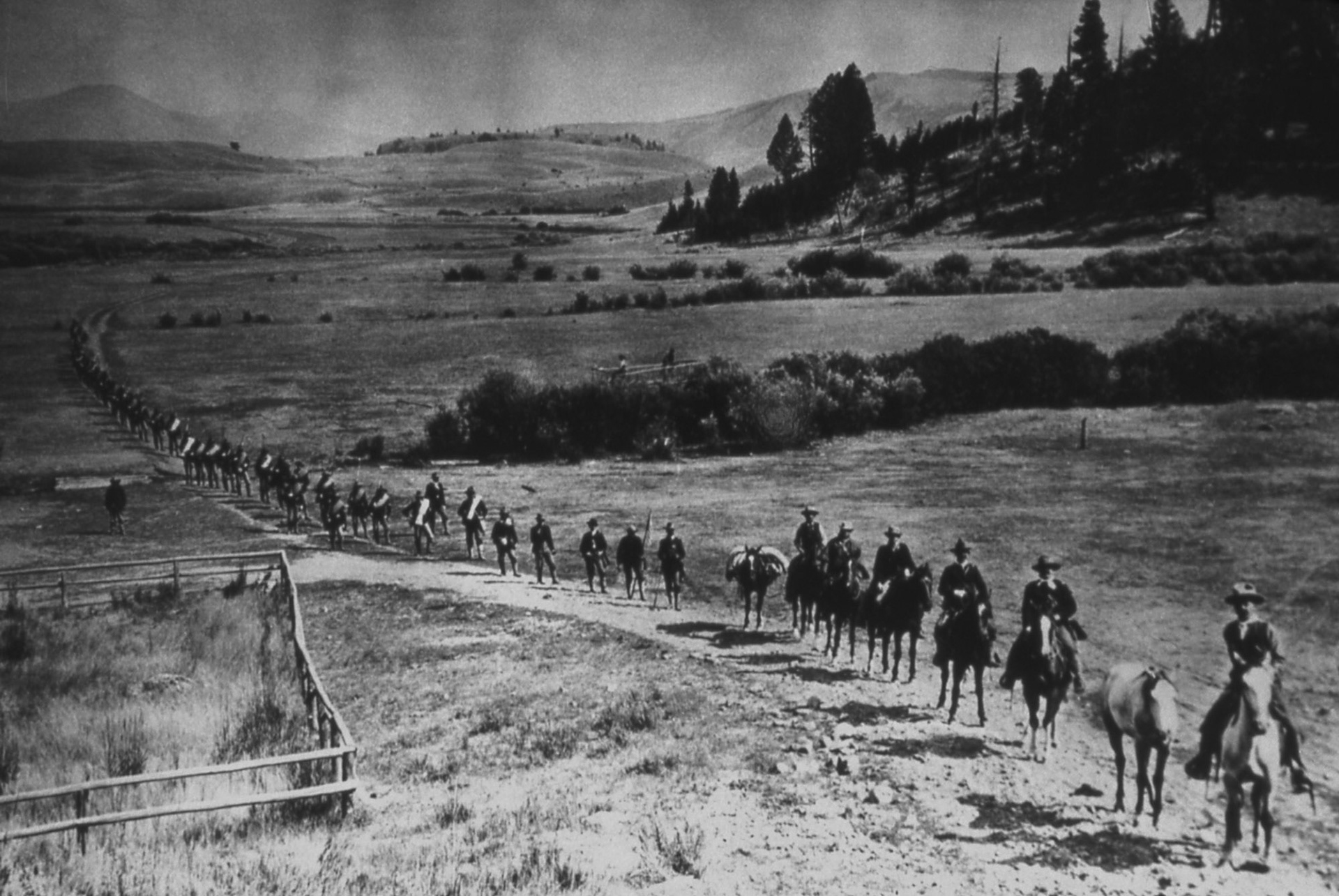
U.S. Calvary, Lamar Valley, NPS Photo Collection
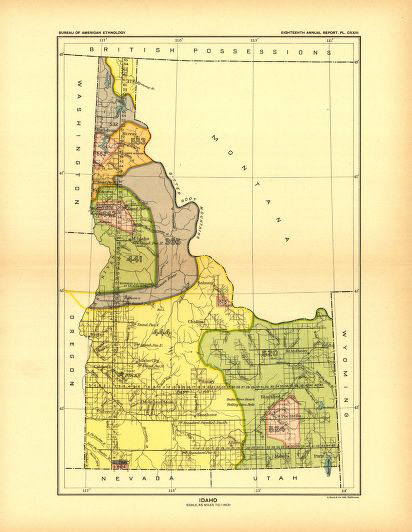
Fort Hall Reservation Boundary (lower pink area) 1896
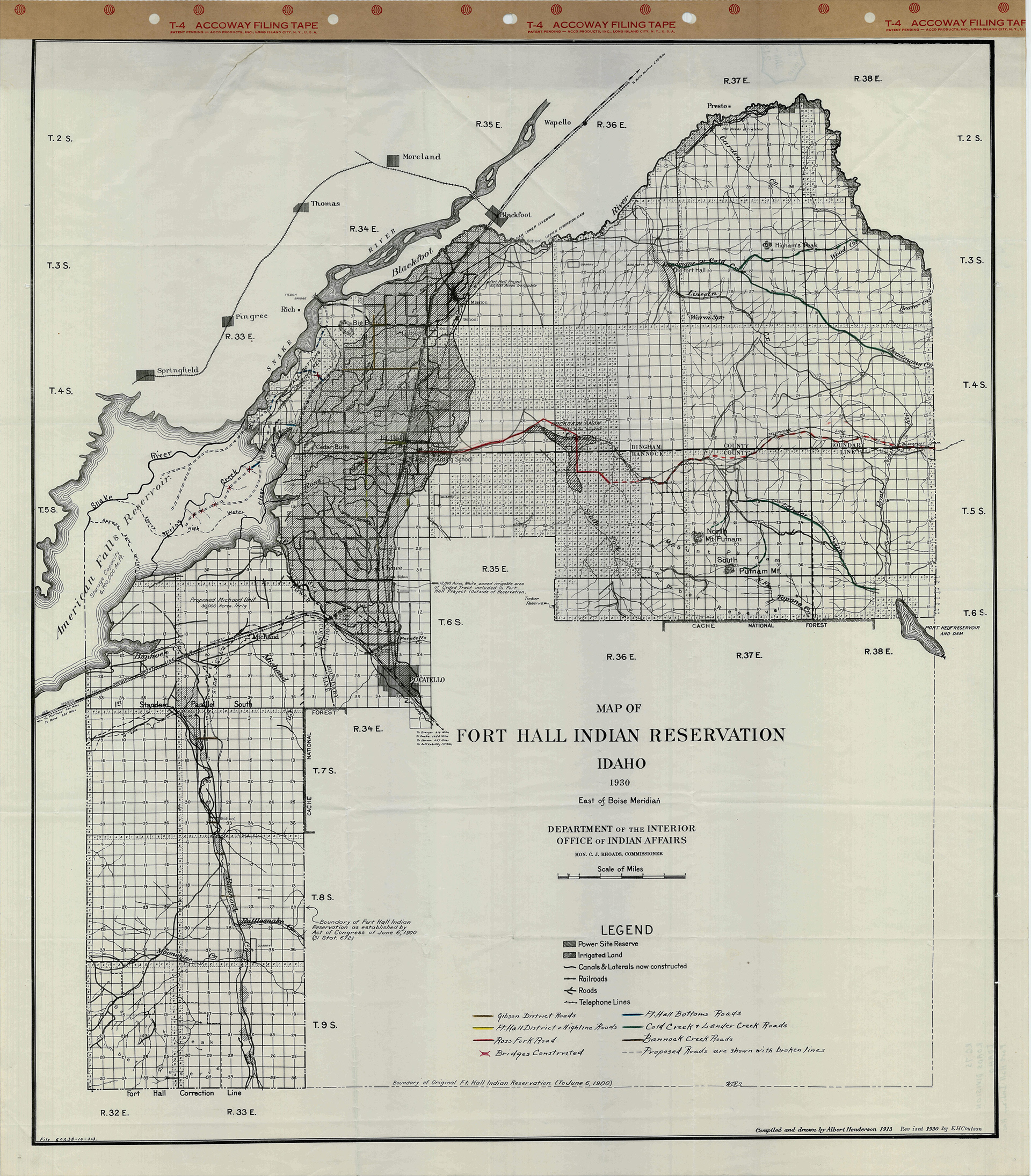
Fort Hall Reservation Boundary 1930
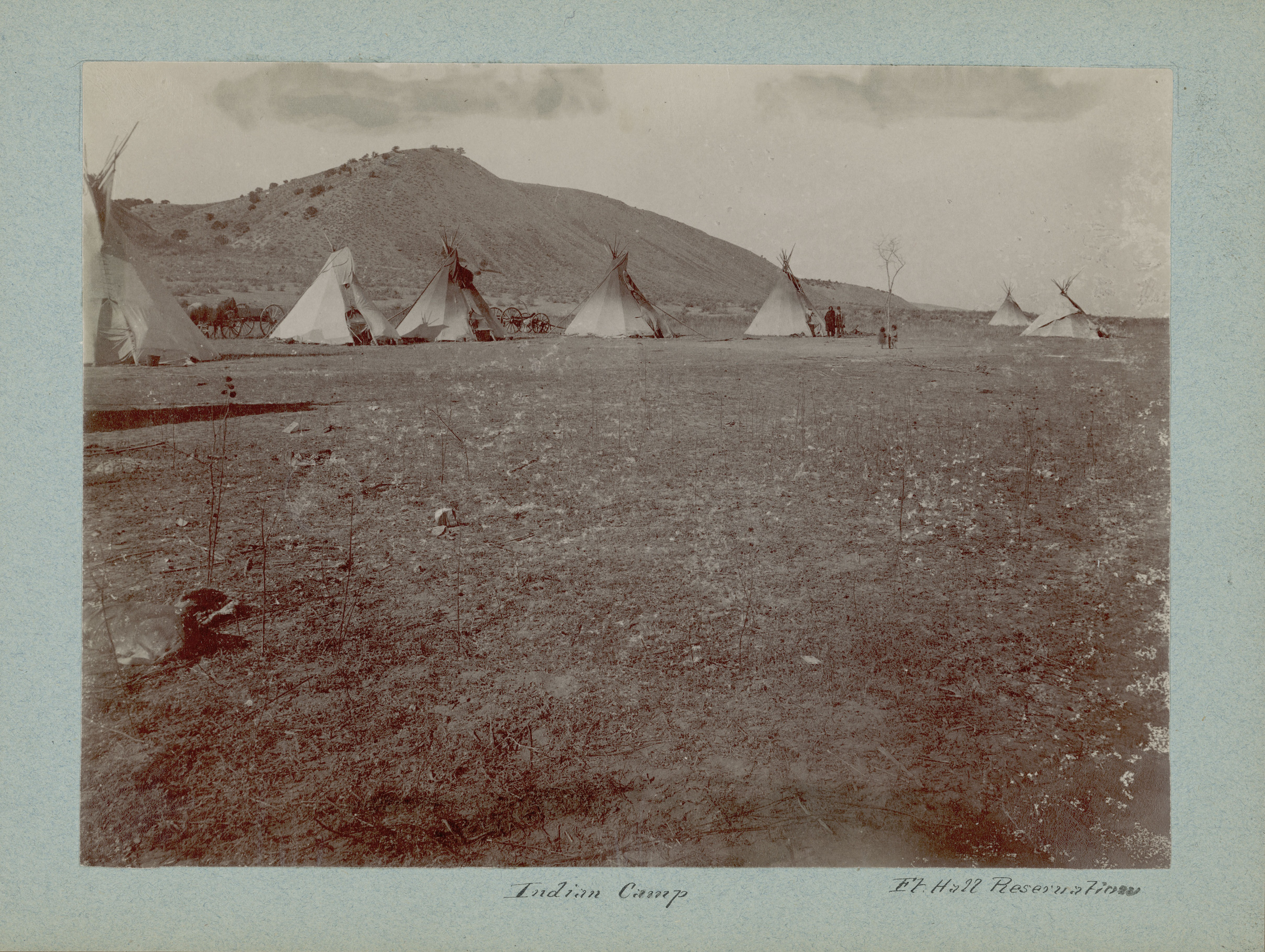
Fort Hall Reservation, Idaho, circa 1890s. Image courtesy of National Anthropological Archives, Smithsonian Institution.
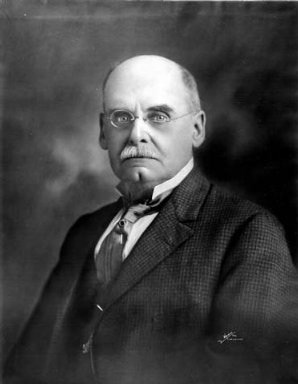
Gibson Clark, 1896, U.S. Attorney District of Wyoming
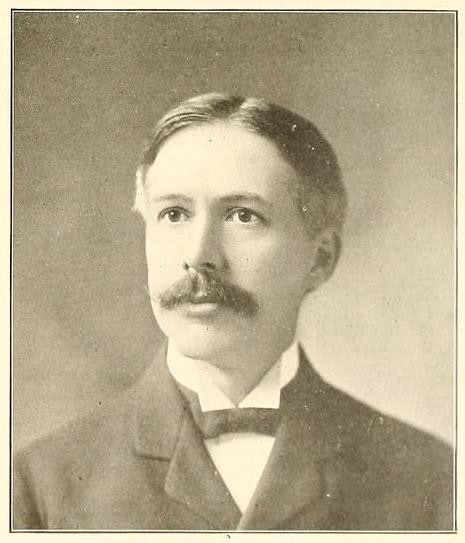
Willis Van Devanter, Wyoming Attorney, circa 1896
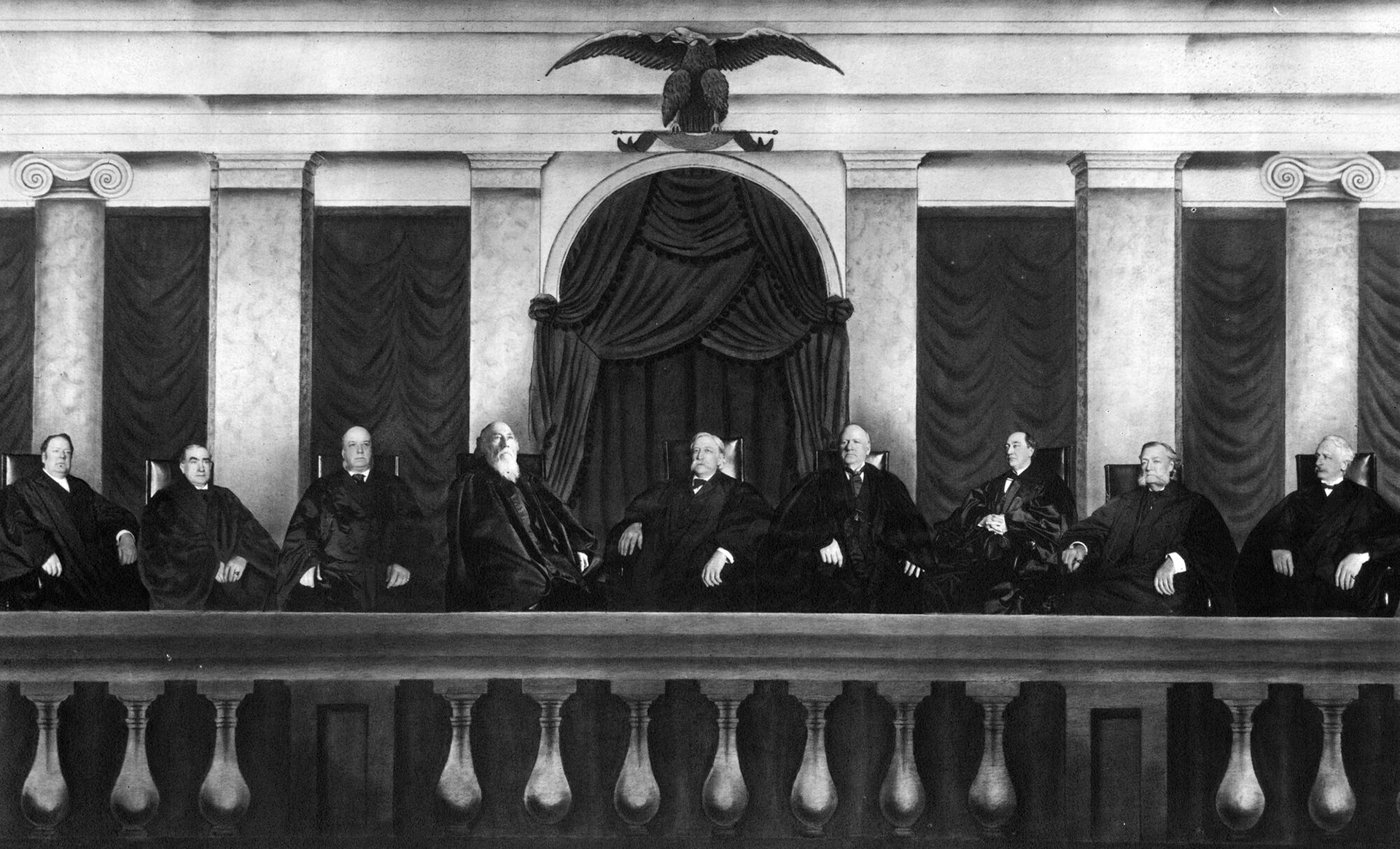
Supreme Court of the United States - Fuller Court - January 1896 to December 1897 Left to Right: Edward Douglass White Jr., Henry Billings Brown, Horace Gray, Stephen Johnson Field, Melville Fuller (Chief Justice of the United States), John Marshall Harlan, David Josiah Brewer, George Shiras, Jr., Rufus W. Peckham. Wikimedia Commons.
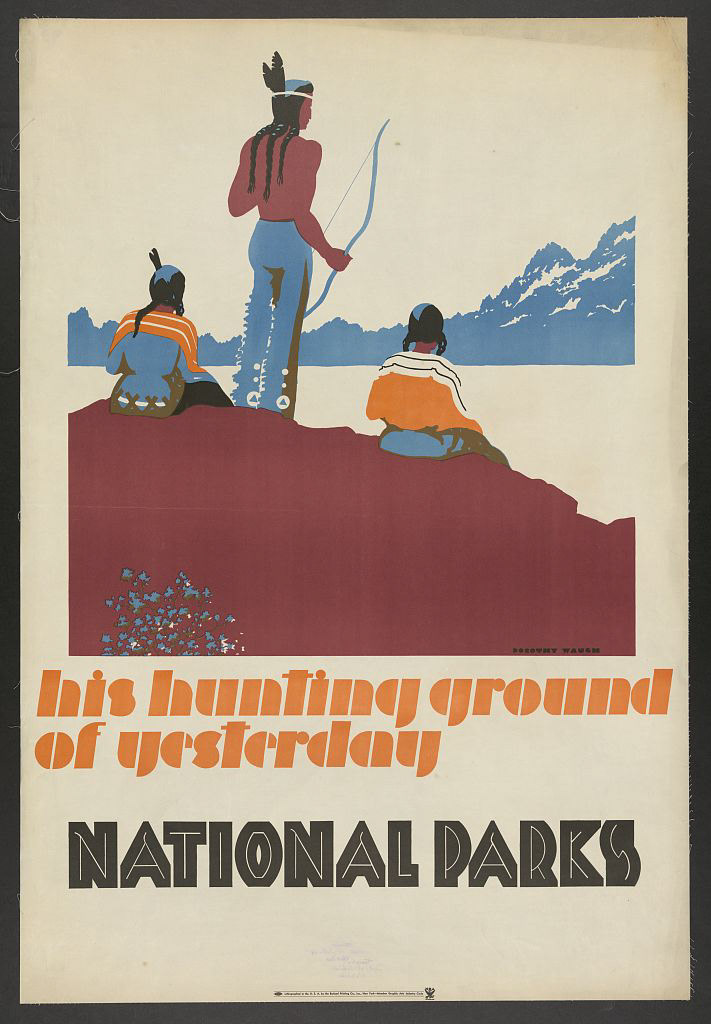
National Park Service Poster by Dorothy Waugh, 1934